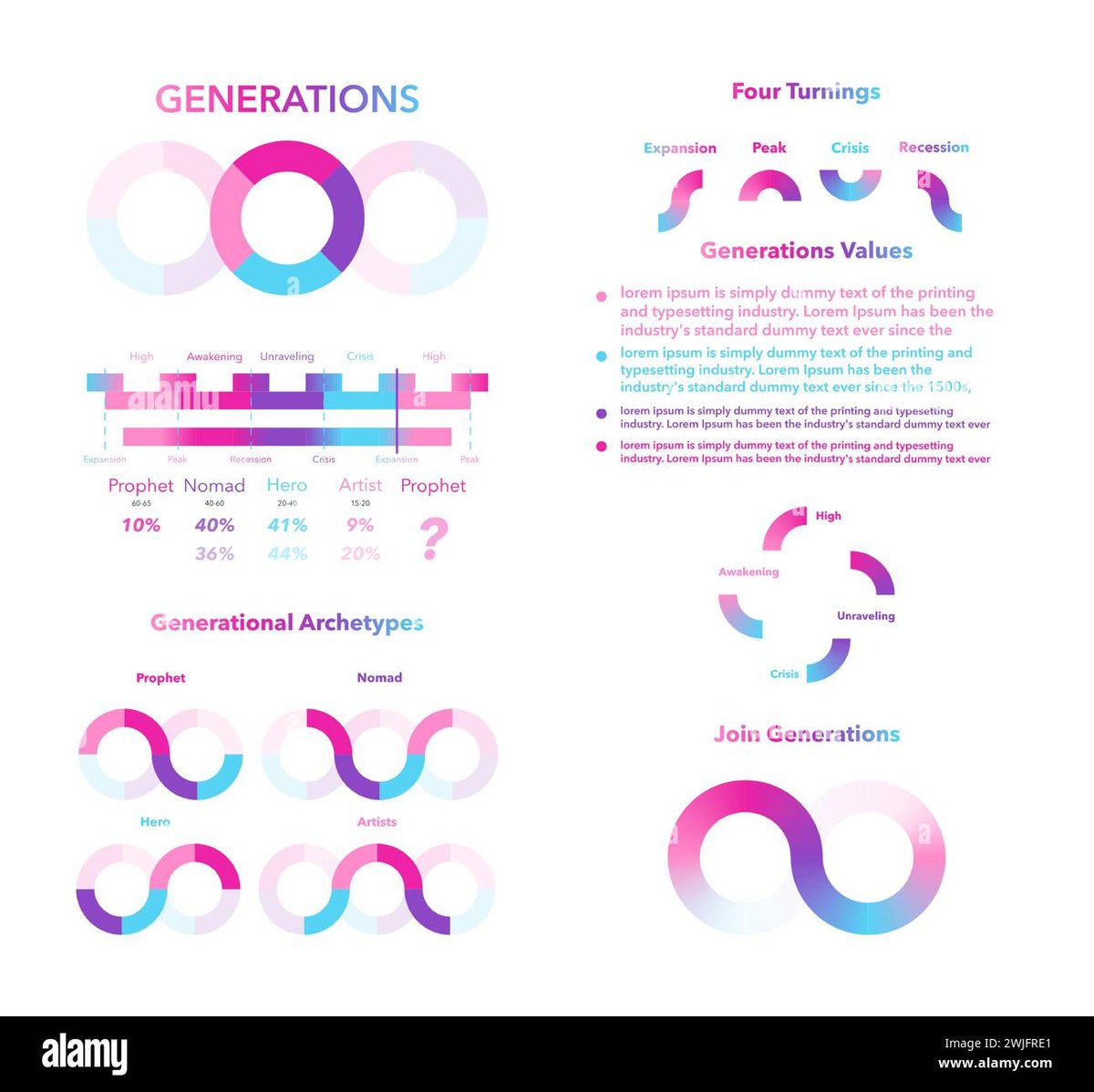
The concept of a "generation" feels intuitive, doesn't it? A natural rhythm in the march of time, signifying the span between you and your parents, or them and their parents. But dig a little deeper, and the Historical Evolution of Generational Length reveals something fascinating: this seemingly simple measure is far from fixed. It's a dynamic variable, molded by everything from biology to societal shifts, and understanding its nuances is key to deciphering our past and predicting our future.
It's not just an academic exercise for demographers; historians, sociologists, and even marketers grapple with what constitutes a "generation" and how long it truly lasts. While we often casually throw around "20 years" or "25 years" as a rough estimate, the reality is a rich tapestry woven from biological imperatives and cultural constructs that have changed dramatically over centuries.
At a Glance: What You'll Learn About Generational Length
- Not a Fixed Number: The "average" generational length has varied significantly across history and cultures, influenced by a blend of biological and societal factors.
- More Than Just Ages: Demographers and biologists define generation time in several precise ways, extending beyond simply the age difference between parent and child.
- Biology Sets the Stage: Our reproductive biology provides the fundamental framework, but culture orchestrates the timing.
- Societal Shifts are Key Drivers: Factors like age of marriage, education, economic conditions, and access to healthcare have profoundly altered generational spans.
- Impact on History and Demography: Understanding generational length is crucial for historical analysis, population projections, and even defining today's "generations" like Gen Z or Millennials.
Unpacking "Generation": Beyond the Family Tree
When we talk about a "generation" in everyday conversation, we usually mean a cohort of people born within a particular time frame, like "Baby Boomers" or "Gen X." However, in population biology and demography, "generation time" carries a more precise meaning. It's the average period between two consecutive generations within a population's lineages—a measure intrinsically linked to biological life cycles and population renewal.
For human populations, this period has generally hovered between 20 to 30 years. But that 20-30 year range isn't a hard and fast rule; it's an average, and within that average lies significant historical and contextual variation, often differing by gender and specific societal conditions.
Historians, for instance, frequently leverage this measure to approximate event dates when precise records are scarce, converting known generational spans into years to piece together timelines. But how do they, or demographers, even calculate such a thing?
The Demographic Science: Three Ways to Measure Generation Time
Scientists aren't just guessing when they talk about generational length. They employ specific methodologies, broadly categorized into two types: those that view it as a population renewal time, and those that focus on the age difference between successive generations. Let's break down the three most common definitions, which offer different lenses on this complex measurement:
- Population Growth and Renewal (R0 Factor): This definition looks at the time it takes for a population to essentially "renew" itself by a factor of its net reproductive rate (R0). R0 represents the expected number of offspring an individual produces over its lifetime. If R0=1, the population is demographically stable.
In this context, generation time (T) is the duration required for the population to increase by a factor of R0. For populations undergoing exponential growth, the formula is T = (ln R0)/r, where 'r' is the growth rate. This definition is more abstract, focusing on population dynamics as a whole. - Average Age Difference Between Parent and Offspring: This is perhaps the most intuitive and widely used definition. It directly measures the inter-generational distance, often expressed as the "average age of mothers at birth of their daughters" in female-based demographic models, though it can also apply to father-son distances or be sex-neutral.
Think of it this way: if, on average, women in a given society have their first child at 25, then the generational length for mothers might be around 25 years. This measure doesn't require complex population growth models and is more directly observable in historical records, like birth and marriage registries. You can explore more about how these periods are calculated by understanding how long do generations last in various contexts. - Age at Expected Reproduction for a Cohort: Similar to the previous definition, this measure focuses on the age when members of a specific birth cohort are expected to reproduce. The key here is that it doesn't require the entire population to be in a "stable age distribution"—meaning, you can analyze different groups (cohorts) within the population.
This offers a more detailed insight into generation time dynamics, as it can be computed for different groups experiencing varying social or economic conditions. It's calculated by summing the ages at which cohort members reproduce and dividing by R0 (the average number of offspring produced by a cohort member).
While the first definition is crucial for complex demographic modeling, the second and third definitions offer more direct insight into the historical evolution of how humans have spaced their generations.
The Biological Baseline: Where Nature Draws the Line
Before we dive into historical shifts, it’s important to acknowledge the biological anchors. Human biology sets the minimum and maximum possible generational length. Puberty, the onset of reproductive capability, generally occurs between ages 10-15. This is our absolute minimum for becoming a parent. On the other end, female fertility typically declines significantly after age 40 and ceases around 50, while male fertility, though longer-lasting, also has practical limits.
So, biologically, a generation could theoretically be as short as 10-15 years or as long as 40-50 years. However, these are extreme edges. The "sweet spot" for human reproduction, encompassing peak fertility and offspring viability, historically falls within the late teens to early thirties. This biological framework provides the unchanging canvas upon which societal and cultural factors paint the actual length of a generation.
Society's Shifting Sands: How Culture Reshapes Generational Spans
This is where the real "evolution" comes into play. The biological capacity for reproduction might be relatively constant, but the age at which people actually reproduce has been dramatically influenced by a myriad of social, economic, technological, and cultural forces throughout history.
The Agrarian Age: Early Starts, Short Spans
Imagine life in an agrarian society, centuries ago. For many, childhood was short. Marriage often occurred young, sometimes in the mid-to-late teens, driven by practical needs: a larger family meant more hands for labor, ensuring survival and prosperity for the farm or trade. There was less emphasis on extended education or career building.
In such contexts, the average age of first childbirth was considerably lower than today. This meant shorter generational lengths, potentially closer to the 20-25 year mark. Children were expected to contribute early, marry early, and have their own children, perpetuating a rapid cycle. Life expectancy was also much lower, meaning fewer overlapping generations and a greater urgency to reproduce.
Industrialization and Urbanization: A Gradual Lengthening
The Industrial Revolution brought monumental shifts. People moved from farms to cities, from self-sufficiency to wage labor. Child labor became common, but eventually, compulsory education laws emerged, extending childhood and delaying entry into the workforce. Economic independence became a prerequisite for marriage for many.
As societies industrialized, the cost of raising children often increased, and the economic benefit of large families diminished. This, coupled with greater access to education and changing social norms, led to a gradual increase in the average age of marriage and first childbirth. Generational lengths began to inch upwards, moving closer to the 25-30 year range, even if the absolute figure for how long do generations last still varied.
The 20th Century: Healthcare, Wars, and Women's Rights
The 20th century saw even more dramatic changes:
- Improved Healthcare and Sanitation: Increased life expectancy meant that parents lived longer, potentially overlapping with their children's adulthood more significantly. It also meant a higher survival rate for infants and children, reducing the pressure to have many children to ensure some would survive.
- World Wars and Economic Depression: These periods often led to fluctuating birth rates and sometimes delayed marriage, temporarily altering generational patterns. "Baby booms" often followed periods of conflict.
- The Rise of Contraception: The widespread availability of birth control gave individuals, especially women, unprecedented control over their reproductive timing. This profound shift allowed for greater planning and often led to delaying childbirth.
- Women's Rights and Education: As women gained greater access to education, professional careers, and economic independence, the average age of marriage and first childbirth continued to rise. The emphasis shifted from early marriage and motherhood to personal and career development, further extending generational length.
These factors collectively pushed the average age of first birth higher, often into the late 20s and early 30s in many developed nations, thus lengthening the generational span.
The Modern Era: Education, Economy, and Extended Adolescence
Today, in many developed countries, the generational length continues its upward trend. Factors at play include:
- Extended Education: More years spent in higher education push back career entry and, consequently, marriage and family formation.
- Economic Pressures: High housing costs, student loan debt, and the need for dual-income households often mean couples delay parenthood until they are more financially secure.
- Career Aspirations: Both men and women are prioritizing career establishment before starting families, often into their late 20s or even 30s.
- Societal Norms: The stigma once associated with later parenthood has largely disappeared; in fact, it's often seen as a responsible choice.
These trends mean that in many parts of the world, the average age of mothers at first birth is now well into the late 20s and early 30s, pushing the generational length closer to the 30-year mark, or even beyond in some urban centers. This is a far cry from the agrarian societies where a new generation might emerge every two decades. Understanding this evolution is vital for anyone asking how long do generations last in the 21st century.
Why Does Generational Length Matter? A Historian's & Demographer's View
Understanding the historical evolution of generational length isn't just an interesting historical footnote; it has significant implications for how we interpret the past and plan for the future.
- Historical Analysis: For historians, knowing the typical generational length in a given period helps in estimating chronologies, understanding family structures, and analyzing social change. A shorter generation means more generations fit into a given century, potentially leading to faster social evolution in some areas.
- Demographic Projections: For demographers, accurate generation time is crucial for population models. It impacts everything from birth rate calculations to dependency ratios (the number of dependents per working-age person), which in turn influences social security, healthcare, and economic planning. If the generation length shifts, population projections can be drastically altered.
- Social and Cultural Understanding: The length of a generation also subtly shapes intergenerational relationships. When generations are shorter, there might be less of an "age gap" in experiences. When they are longer, the gap in cultural norms, technological fluency, and life experiences between parents and children can feel more pronounced. This impacts how we define modern cohorts like Millennials or Gen Z, which are often grouped by shared formative experiences tied to specific historical periods.
Untangling the Threads: A Journalist's Perspective on Measurement
So, if you're a journalist trying to understand demographic shifts or a curious reader, how do you make sense of these definitions?
- For Historical Context: When reading historical accounts, assume that generational length was likely shorter than today, especially before the 20th century. Contextual factors like life expectancy, age of marriage, and economic dependence played a huge role.
- For Modern Comparisons: Be aware that "generation time" in a demographic report is a precise scientific measure, often reflecting the average age of mothers at first birth (or similar). This is distinct from the more casual "cohort generation" labels we use (e.g., Millennials).
- Remember the Blended Factors: Always consider the interplay of biology (the ability to reproduce) and societal factors (the decision and timing of reproduction). No single factor dictates the length of a generation entirely.
When discussions arise about how long do generations last in today's world, it's a reflection of these complex, evolving dynamics. The numbers we cite are averages, reflecting the dominant reproductive patterns of a given society at a given time.
Navigating the Shifting Sands of Time
The Historical Evolution of Generational Length is a powerful testament to humanity's adaptability. From the quick successions of agrarian families to the increasingly extended intervals of modern, post-industrial societies, the rhythm of generations has never been static. It responds to our scientific advancements, economic realities, cultural values, and personal choices.
As we look to the future, it's likely these lengths will continue to adapt. Factors like further urbanization, environmental concerns, and continued advancements in reproductive technology could introduce new variations to this fundamental aspect of human existence. Ultimately, understanding this evolution helps us appreciate the intricate dance between our biology and our culture, revealing how we, as a species, have always paced ourselves through time.