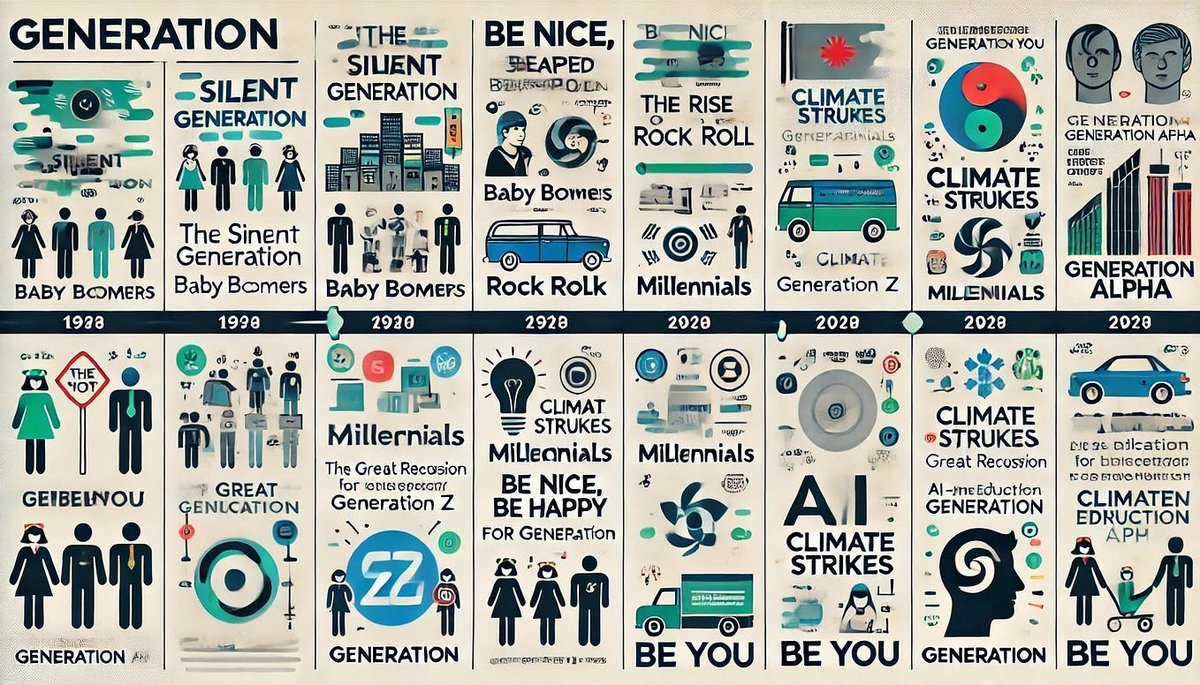
Have you ever stopped to consider why the generations we talk about today — from Baby Boomers to Gen Z and beyond — feel so distinct from one another? It’s not just about when someone was born; it’s about a complex interplay of factors influencing generational timelines that sculpt who we become and how we interact with the world. These aren't arbitrary lines in the sand, but dynamic markers shaped by everything from technological revolutions to global pandemics. Understanding these forces isn't just an academic exercise; it's essential for navigating our rapidly evolving society, bridging divides, and anticipating future shifts in culture, economy, and politics.
This isn't your average history lesson. We're diving into the real mechanics behind generational change, uncovering the powerful catalysts that define birth cohorts and the collective experiences that give them their unique character.
At a Glance: Understanding Generational Drivers
- Generation time is lengthening: Modern parents are having children later than any point in human history, driven by societal changes.
- Key factors are interconnected: Socioeconomics, technology, public health, and major historical events all play a crucial role.
- Timelines are approximate but powerful: While exact birth years can vary, shared experiences define a generation's core traits.
- Generations impact everything: From consumer behavior to the workforce, political landscapes, and even parenting styles, understanding these dynamics is key.
- The future is digitally native: Emerging generations, like Alpha and Beta, are profoundly shaped by pervasive technology and global connectivity.
The Shifting Rhythm of Human Generation Time
Before we dive into the named generations, it’s crucial to grasp the fundamental concept of "human generation time." In scientific terms, this isn't about cultural cohorts but the average age of parents when their children are born. Think of it as the biological drumbeat of population change and evolution. Historically, this average has hovered around 26.9 years over the last quarter-million years. But don't mistake that for a static number; it's a dynamic measure that tells a fascinating story about human progress.
During the Paleolithic era, generation time was notably shorter, with mothers averaging 23.2 years and fathers 30.7 years. This interval began a slow, steady increase with the dawn of agriculture and has accelerated dramatically in the modern era. Today, in developed nations, first-time mothers often approach or surpass 30 years of age. This represents the longest average generation time in human history. This lengthening isn't merely an interesting statistic; it's a foundational shift influenced by profound societal changes, affecting everything from genetic mutation rates to demographic projections. It’s a compelling lens through which to examine how long generations last and what defines their duration.
How Society's Pillars Reshape Birth Cohorts
So, what exactly is fueling this historical lengthening of generation time, and how does it translate into the distinct characteristics of each named generation? The answer lies in powerful, interconnected societal pillars.
Socioeconomic Shifts: The Cost of Living and Learning
Perhaps the most significant force pushing back parenthood — and thus stretching generation timelines — is the changing socioeconomic landscape.
- Higher Education & Career Prioritization: For many, especially women, accessing higher education has become a norm rather than an exception. Advanced degrees and career aspirations often mean delaying marriage and children. The years spent in college and grad school, followed by establishing a career, push the average age of first-time parents upward.
- Rising Cost of Raising Children: In an era of increasing costs for housing, education, and healthcare, raising a family has become an incredibly expensive endeavor. Many individuals and couples choose to wait until they are more financially stable before having children, ensuring they can provide a certain quality of life.
- Economic Uncertainty: Global financial crises, recessions, and a volatile job market can lead prospective parents to defer family planning, waiting for more stable economic conditions. This uncertainty directly affects birth rates and parental age.
Consider the Millennial Generation (born 1981–1996). Many entered adulthood during the Great Recession, delaying homeownership, marriage, and children compared to previous generations. This shared economic reality profoundly shaped their approach to life, fostering traits like community-orientation and adaptability.
Technological Leaps: Innovation as a Generational Architect
Technology isn't just a tool; it's a sculptor of generational experiences, fundamentally altering how we live, work, and connect.
- Reproductive Technologies: Advancements like reliable contraception and assisted reproductive technologies (e.g., IVF) give individuals unprecedented control over family planning. These innovations extend the biological window for conception, making later parenthood a viable and increasingly common choice.
- Digital Connectivity: For Generation Z (born 1997–2010) and especially Generation Alpha (born 2010–2024), a world without constant digital connection is unimaginable. They are the first generations born into pervasive internet access, smartphones, and social media. This shapes their communication styles, learning methods, social interactions, and even their expectations for immediate information.
- Automation and AI: As we move towards Generation Beta (born 2025–2039), the influence of artificial intelligence and advanced automation will be deeply woven into daily life. This isn't just about entertainment; it's about how they learn, work, solve problems, and interact with their environment, potentially redefining education and the workforce.
The digital native status of Gen Z and Alpha means they approach problems, relationships, and identity differently than their predecessors. They are often more globally aware, accustomed to diverse perspectives, and less tethered to traditional institutions, largely because technology has dissolved geographical and social barriers.
Public Health & Lifespan: A Longer Biological Clock
Improvements in public health and a general increase in human lifespan provide the biological foundation for delayed parenthood. When people live longer, healthier lives, the biological imperative to reproduce early lessens.
- Increased Lifespan: A longer life expectancy means more time to pursue education, careers, and personal goals before starting a family. The pressure to have children at a young age diminishes when adulthood stretches out considerably longer.
- Better Healthcare: Access to better maternal and infant care, along with treatments for fertility issues, supports the trend toward later pregnancies, making it safer and more feasible for older parents.
These public health triumphs don't just extend individual lives; they subtly, yet profoundly, extend the generational interval, contributing to the longest average generation time in history.
Historical Earthquakes: Moments That Define a Cohort
Beyond the steady hum of socioeconomic, technological, and health changes, specific historical events act as "earthquakes," shaking the collective consciousness and indelibly marking the generations that live through them. These are the shared experiences that truly forge a generational identity.
Major Conflicts & Economic Crises
- The Greatest Generation (born 1901–1927): Their defining crucible was the Great Depression and World War II. Scarcity, sacrifice, and a collective fight for survival fostered traits of hard work, grit, duty, and resourcefulness. These experiences created an enduring ethos of civic responsibility and national unity.
- The Silent Generation (born 1928–1945): Coming of age in the shadow of war and McCarthyism, they learned to conform and maintain a low profile. Their strong work ethic was rooted in the desire for stability and security after a tumultuous period.
Social Revolutions & Cultural Shifts
- Baby Boomers (born 1946–1964): Named for the post-WWII population boom, they witnessed and actively participated in the Civil Rights Movement, the Vietnam War protests, and burgeoning counter-culture. They redefined social norms, challenged authority, and were among the first to consider their children's perspectives in parenting.
- Generation X (born 1965–1980): They came of age amidst the AIDS epidemic, the rise of MTV, and the nascent movements for LGBTQ+ rights. Often characterized as independent and resourceful, they navigated a world with increasing social complexities and were the first to adopt "helicopter parenting" styles, perhaps as a reaction to their own "latchkey kid" upbringing.
Global Catastrophes & Digital Milestones
- Millennials (born 1981–1996): Their formative years were bookended by the Oklahoma City bombing, the tragedy of 9/11, and the explosion of the internet and social media. These events imbued them with a sense of global interconnectedness, community-orientation, and a deep awareness of environmental issues. They often encourage authentic self-expression in their children, sometimes leaning towards a freer parenting approach than Gen X.
- Generation Z (born 1997–2010): The first true digital natives, they have never known a world without the internet. They've also grappled with ongoing issues of climate change, school shootings, and widespread social unrest. This has made them exceptionally environmentally conscious, inclusive, accepting, and politically aware. They are often advocates for social justice and authenticity.
- Generation Alpha (born 2010–2024): Many Alphas were born during the COVID-19 pandemic, experiencing lockdowns and a world reshaped by remote learning and increased digital reliance from their earliest days. They are highly tech-savvy, more diverse than previous generations, and potentially face challenges like reduced attention spans and fewer in-person connections due to their technology reliance. They are poised to redefine education and the workforce.
These profound moments don't just happen to a generation; they become integral to its collective identity, shaping its values, worldviews, and behaviors.
The Nuance: Why Generational Timelines Aren't Rigid
While we assign approximate birth year ranges to each generation, it's vital to remember these are guidelines, not rigid scientific classifications. Social scientists use these 20-year intervals as a useful framework, recognizing that the "critical life events and transitions" that define a generation aren't experienced by everyone at the exact same moment.
- Overlap and Fluidity: There's always an overlap between generations, with people born on the cusp often sharing traits with both their preceding and succeeding cohorts. Someone born in 1964, for instance, might resonate with both Boomer and Gen X characteristics.
- Regional Differences: The impact of a "defining event" can vary significantly across different regions or countries. A global event like a pandemic might have universal reach, but local economic shifts or cultural movements might influence generations differently depending on geography.
- Individual Variation: Not everyone within a generation will conform to its stereotypes. Individual personalities, family upbringing, and personal experiences always play a powerful role in shaping a person's identity, regardless of their birth year.
The factors influencing generational timelines create a powerful, overarching pattern, but they never erase individual diversity. These timelines are tools for understanding broad trends and societal shifts, not prescriptive boxes for individuals.
Generational Impacts: How These Shifts Ripple Through Society
Understanding the factors that influence generational timelines isn't just a matter of historical curiosity; it has profound, practical implications across virtually every sector of society.
The Evolving Workforce
Different generations bring distinct values, work ethics, and expectations to the workplace.
- Work-Life Balance: From the "live to work" mentality of some older generations to the "work to live" ethos of Millennials and Gen Z, expectations for work-life balance have shifted dramatically.
- Communication Styles: Digital natives prefer instant, often asynchronous communication, while older generations might still favor face-to-face meetings or phone calls.
- Career Loyalty: Younger generations often prioritize skill development and purpose over long-term loyalty to a single company, contrasting with earlier generations who valued stability and tenure.
- Diversity and Inclusion: Younger generations, especially Gen Z, are driving demands for greater diversity, equity, and inclusion in the workplace, reflecting their upbringing in a more globally connected and socially aware world.
Businesses and leaders who understand these evolving dynamics can better attract, retain, and motivate talent, fostering a more harmonious and productive multigenerational workforce.
Consumer Behavior and Market Trends
Each generation represents a unique market segment with distinct preferences, spending habits, and brand loyalties.
- Digital Commerce: Gen Z and Alpha are digital-first consumers, comfortable with online shopping, mobile payments, and social commerce.
- Values-Driven Consumption: Younger generations often prioritize brands that align with their social and environmental values, driving demand for sustainable and ethically produced goods.
- Experiences vs. Possessions: While still valuing material goods, Millennials and Gen Z often place a higher premium on experiences (travel, events) over accumulating possessions.
- Information Sources: Younger generations rely heavily on social media, influencers, and online reviews for product discovery, whereas older generations might trust traditional advertising or word-of-mouth.
For marketers, recognizing these generational nuances is critical for effective product development, branding, and communication strategies.
Political Landscapes and Civic Engagement
Generational experiences profoundly shape political affiliations, policy priorities, and modes of civic engagement.
- Policy Priorities: Younger generations often prioritize issues like climate change, social justice, and student debt, while older generations might focus more on healthcare, national security, or retirement benefits.
- Political Participation: Gen Z, despite being digital natives, often shows high levels of political awareness and engagement through online activism, protests, and voting, challenging stereotypes of apathy.
- Trust in Institutions: Trust in traditional institutions (government, media, corporations) often varies significantly between generations, influenced by their formative historical experiences.
Politicians and policymakers must grasp these evolving generational viewpoints to effectively represent constituents and craft relevant legislation.
Parenting Styles and Family Dynamics
The way children are raised evolves with each generation, a direct reflection of their parents' formative experiences and the changing world.
- Boomers: Often challenged traditional, authoritarian parenting, introducing more democratic family structures.
- Gen X: The first to adopt "helicopter parenting," perhaps a response to their own less supervised upbringings.
- Millennials: Tend to be "snowplow parents," clearing obstacles for their children, and emphasize authentic self-expression and open communication, often with a "free-range" element.
- Alphas: Will be raised by Millennial and older Gen Z parents, likely continuing the trend of highly involved, digitally aware parenting that values individuality and emotional intelligence, but perhaps with a greater emphasis on digital literacy and critical thinking about online content.
These shifts in parenting styles illustrate how generational experiences are not just passed down, but actively reinterpreted and transformed, impacting the development of future generations.
Common Questions About Generational Timelines
You've got questions, and we've got answers. Let's tackle some common misconceptions about generations.
Are generational timelines scientifically exact?
No, not in the way a biological age is. Generational timelines (like the 1981–1996 for Millennials) are approximate frameworks developed by social scientists and demographers. They serve as useful tools for understanding broad trends, cultural shifts, and shared historical experiences, but they are not rigid, universally agreed-upon scientific facts. The "factors influencing generational timelines" are complex and don't neatly align with specific birth years for every individual.
Does everyone within a generation fit the same stereotype?
Absolutely not. Generational characteristics describe broad tendencies and common experiences, not individual traits. While a generation might be known for its tech-savviness or its work ethic, individual personalities, family backgrounds, socioeconomic status, geographic location, and countless other variables mean that people within the same generation can be incredibly diverse. Stereotyping individuals based solely on their birth year is reductive and inaccurate.
How does the pace of change affect generational definitions?
The accelerating pace of change—particularly driven by technology—is making generational distinctions feel more rapid and pronounced. While the traditional 20-year interval remains a common reference, some argue that the profound shifts occurring every few years (e.g., the rise of AI, new social media platforms, global events) mean that defining a generation might require shorter intervals in the future. The sheer volume and speed of new experiences mean that cohorts are being shaped by unique factors more quickly than ever before.
Why do some generational names change or have alternatives?
Generational names often evolve and some have alternative monikers (e.g., Millennials are also Gen Y, Gen Z is sometimes iGen). This reflects the organic nature of how these groups are identified and studied. Sometimes a name catches on due to media popularization (like "Baby Boomers"), while other names are coined by researchers or writers to capture a specific essence. The name often reflects the key "factors influencing generational timelines" that define that group.
Navigating a Multigenerational World
Understanding the factors influencing generational timelines is more than just a passing curiosity; it’s a critical lens for making sense of our dynamic world. From socioeconomic pressures that delay parenthood to technological revolutions that reshape childhood, and from global conflicts that forge resilience to cultural movements that challenge norms, every element plays a role in sculpting the distinct identities of birth cohorts.
In a society increasingly characterized by rapid change and diverse perspectives, recognizing these foundational influences allows us to:
- Communicate more effectively: By appreciating different generational communication styles and values.
- Collaborate more productively: By leveraging the unique strengths and perspectives each generation brings.
- Innovate more thoughtfully: By anticipating future needs and challenges based on emerging generational traits.
- Bridge divides more empathetically: By understanding the historical contexts and formative experiences that shape differing viewpoints.
The generations aren't just passing through; they are actively shaping our collective future. By understanding the forces that define them, you gain invaluable insight into the evolution of society itself, equipping you to engage, adapt, and lead in a world constantly being redefined by its newest inhabitants. The next time you encounter someone from a different generation, consider not just their age, but the profound tapestry of factors that have woven their unique perspective.